
Full arch implant supported restoration
What it is, who it helps, and what to expect
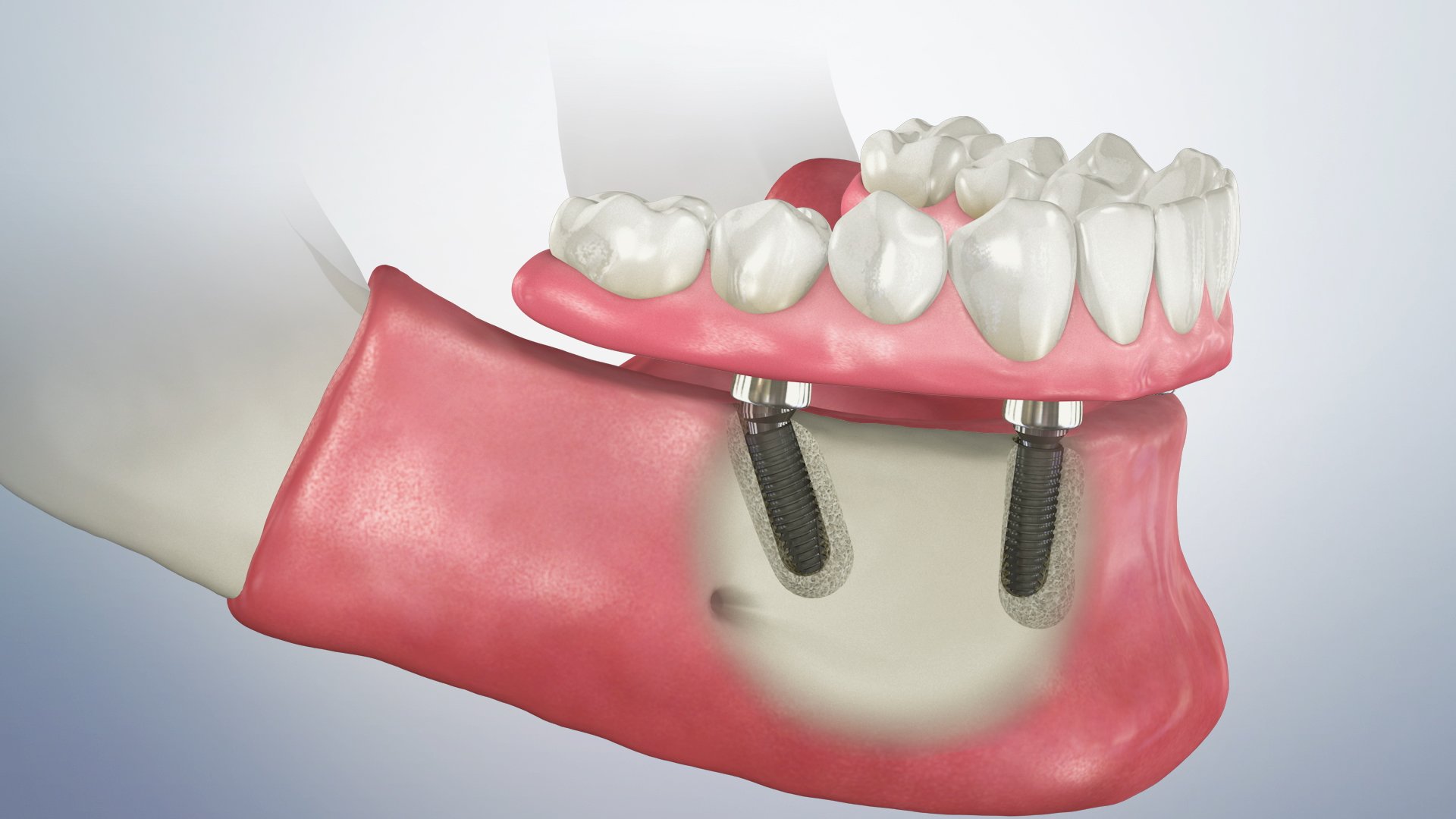
If you have spent years working around failing teeth, you know the routine. Chewing on one side. Avoiding certain foods. Dreading the dentist. If you have worn dentures long enough, you also know their limits.
There is a treatment worth understanding for both situations. The most accurate name for it is full arch implant supported restoration. You may have heard it called All-on-4, a branded term that shows up in TV commercials and mailers. They refer to the same general idea. We use the proper clinical name throughout this article because it more accurately describes the work.
This guide is meant to fill in the gaps in plain language. We do these cases at our office in Deer Park. Most patients tell us afterward that the hardest part was deciding to move forward. The procedure itself, the healing, and the years that follow tend to go more smoothly than people expect. The deciding part is where the unknowns live.
Here is what the treatment is, who it tends to work well for, and what to expect from start to finish.
What it actually is
A full arch implant supported restoration replaces all of the teeth in an upper or lower arch using a small number of dental implants. In most cases that is four. Some cases call for six, depending on bone quality and bite forces. The implants are placed in the jawbone, and a single fixed prosthesis (a full set of teeth) is anchored to those implants.
The result looks and functions like a complete set of natural teeth. It does not come out at night. You do not take it out to clean it. You brush and floss the way you would natural teeth, with a few specifics we cover below.
The trade name All-on-4 refers specifically to a four-implant version popularized by one implant manufacturer. The general approach we offer is the same idea: replace a full arch with a fixed prosthesis on a small number of implants. Implant count and placement get tailored to your anatomy.
Who tends to be a good candidate
The straightforward candidates are adults who are missing most or all of their teeth in an upper or lower arch, or whose remaining teeth have failed and need to come out. That includes people who currently wear full dentures and are tired of slipping and limited food choices; people with advanced periodontal disease whose teeth are loose or no longer salvageable; and people with several failing teeth who would otherwise face one extraction and one bridge or implant after another over the next few years.
One of the practical advantages of this approach is that it can often be done in patients who do not have enough bone for traditional implants. The implants are placed at angles that take advantage of the densest available bone, which often means less need for bone grafting. This is a clinical judgment we make at the consult, after a 3D scan.
Cases that need extra discussion include patients who smoke heavily, have uncontrolled diabetes, or are on certain medications. Long-term IV bisphosphonates for osteoporosis are the main one to flag. None of these are automatic disqualifications. They just require a longer conversation about risk and what we can do to improve outcomes.
The process, step by step
1. The consultation
The first visit is short and unhurried. We do a 3D scan of your jaw, talk through what you are hoping for, and look at any existing imaging or records. By the end of that visit, you will have a clear sense of whether full arch implants are a good fit for you. You will also leave with a written estimate that covers the full procedure. There is no commitment.
2. The surgical day
If we are proceeding, the surgical visit happens in our office. Any teeth that need to come out are removed. The implants are placed. A temporary set of fixed teeth (sometimes called the transitional or immediate prosthesis) is attached to the implants the same day. You walk out with teeth. You do not go home with gaps.
The surgery itself is done with local anesthesia and oral sedation. Most patients are surprised at how manageable it is. Plan to take it easy for two or three days afterward.
3. Healing and provisional teeth
Over the next three to six months, the implants integrate with your jawbone. This is called osseointegration. During that period, you wear the temporary teeth. They look natural and function well, but the bite is intentionally a little softer than the final result. Soft food in the first week or two, then most normal eating after that, with the harder foods coming later.
4. The final prosthesis
Once the implants are fully integrated, we replace the temporary teeth with the final, permanent prosthesis. This is the set you will have for the long term. Strong, color-matched, designed for the way your face moves and the way you bite. The fitting visits are unhurried. We adjust until it feels right.
What life is like once it is done
The single biggest change patients report is that they stop thinking about their teeth. Eating returns to normal. Steaks, apples, corn on the cob, all of it. Speaking is clearer than with dentures because nothing moves. There is no adhesive. No soaking cup on the bathroom counter. No anxiety about a denture slipping in front of other people.
Cleaning is straightforward but a little different. You brush twice a day. You floss with a special threader or a water flosser to clean under the prosthesis where it meets the gum. You come in for hygiene visits at the cadence we recommend — usually every three to four months for the first year, then every six months. Our patient education library has a short video on day-to-day care.
A well-cared-for full arch prosthesis lasts decades. The implants themselves are titanium and do not decay. The teeth on top are durable but eventually show wear, the same way natural teeth do. Most patients get fifteen to twenty years out of the original prosthesis before considering a refresh. The implants underneath stay put.
How it compares to the alternatives
Traditional dentures are the most common alternative. They are less expensive up front, but they sit on the gums rather than anchoring to bone. Over time, the jawbone resorbs underneath them, the fit changes, and they need to be relined or replaced. Many patients who switch from dentures to a fixed implant supported restoration describe it as the difference between renting and owning.
Implant retained overdentures (sometimes called locator retained overdentures) are a middle option. Two to four implants hold a denture in place that snaps on and comes out for cleaning. Less expensive than the fixed approach. More secure than a traditional denture. A reasonable choice for patients who want some of the stability of implants without the full investment.
Multiple individual implants, where each missing tooth gets its own implant, are the gold standard when you have only a few teeth missing. For a full arch, it is usually overkill. More implants. More cost. Longer treatment. No clinical advantage over a four or six implant restoration for most patients.
What it costs
The honest answer is that it depends. On how many teeth need to be extracted. On whether you are treating one arch or both. On the materials chosen for the final prosthesis. And a few other case-specific factors.
As a rough range, single-arch full arch cases in our office typically fall between $25,000 and $35,000 all-in. That includes the implants, the surgery, the temporary teeth, and the final prosthesis.
We give you a written, itemized estimate at the consult. No surprise add-ons. We work with some major PPO insurance plans.
Your next step
If you are weighing this option, or if you just want a clear-eyed second opinion on whether your current teeth can be saved, a consultation is the place to start. It is a 3D scan, an unhurried conversation, and a written estimate. No commitment.
We are in Deer Park, WA, and we see patients from across the Spokane area, North Idaho, and the surrounding communities.
Related videos from our patient education library
To see the procedures and outcomes covered in this article, the patient education library has short clinical animations that explain each one visually: